

This is a very significant and fast-moving conflict. Here is a comprehensive breakdown of the causes, the deeper issues, and the U.S. involvement.
How Did the War Begin?
On February 28, 2026, Israel and the United States began a series of strikes against Iran, saying they aimed to induce regime change and target Iran's nuclear and ballistic missile programme.
The opening salvo assassinated Supreme Leader Ali Khamenei, along with other senior Iranian officials and family members. Iran responded with missile and drone strikes against Israel, U.S. military bases, and countries across the region, including Bahrain, Iraq, Kuwait, Saudi Arabia, the UAE, and others.
The war is now in its 12th day (as of today, March 12, 2026). Tehran says U.S. and Israeli forces have bombed nearly 10,000 civilian sites, resulting in more than 1,300 civilian deaths since February 28.
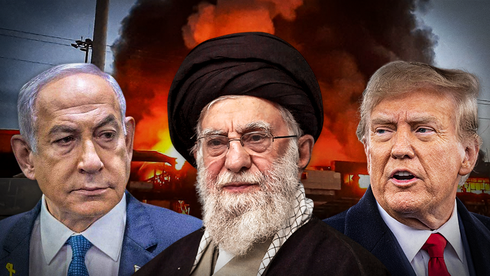 |
| Pic From Ynet News |
The Real, Deeper Issues Behind the Conflict
There are several layers to this war, going far beyond the immediate triggers:
1. Iran's Nuclear Program
The confrontation took place after years of rising tension over Iran's nuclear program, its ballistic missiles, and its military reach across the Middle East. Attempts to renegotiate a nuclear deal — after the collapse of the JCPOA — in 2025 and 2026 were unsuccessful. The U.S. and Israel feared Iran was on the verge of weaponizing its nuclear capability.
2. Iran's Regional Proxy Network
For decades, Iran has built and funded a network of armed groups — Hezbollah in Lebanon, Hamas in Gaza, the Houthis in Yemen, and various militias in Iraq — collectively called the "Axis of Resistance." Israel has seen this as an existential threat along its borders. Many of Iran's regional allies had already been significantly weakened, primarily by Israeli military action since 2023, which made this the opportune moment to strike at the source.
3. Iran Was at Its Weakest Point in Years
The attacks came when the Iranian regime was arguably at its weakest in some years. There were extensive protests in Iran in early 2026, motivated by a weakened economy and struggling infrastructure. The protests were put down with extensive use of force, illustrating the regime's weakened legitimacy. This internal fragility made the moment strategically attractive for Israel and the U.S.
4. Failed Nuclear Diplomacy
The attacks also followed the failure of indirect negotiations in February 2026 on a new nuclear agreement. The mediating Omani foreign minister had reported significant progress, with Iran willing to make concessions, but President Trump said he was "not thrilled" with the talks. When diplomacy collapsed, the military option was chosen.
5. Decades of Ideological Enmity
Iran has not recognized Israel's right to exist since the 1979 Islamic Revolution and has directly called for Israel's destruction. Israel views a nuclear-armed Iran as an existential threat. This is not just a policy dispute — it is a fundamental clash over the right to exist.
Why Is the United States Involved?
The U.S. stated it is acting in line with the right to self-defense under the UN Charter, and has accused Iran of continuing to advance its nuclear and ballistic missile programs. But beyond the stated justifications:
- Trump's Goals: The White House laid out Trump's vision for an Iranian "unconditional surrender," including dismantling Iran's ballistic missile arsenal. Trump has also called for regime change.
- Pre-war Military Buildup: In the lead-up to the war, the U.S. undertook its largest military buildup in the Middle East since the 2003 invasion of Iraq.
- Prior Joint Action: Israel and the U.S. had already conducted joint strikes on Iran's nuclear facilities during a "Twelve-Day War" in June 2025, which softened Iran's defenses before this larger campaign.
The Current Situation (March 12, 2026)
The conflict is escalating economically and militarily:
- Oil prices have climbed back over $100 a barrel, and the IEA agreed to release a record 400 million barrels from reserves — but this failed to bring prices down.
- Iran has effectively closed the Strait of Hormuz, through which roughly one-fifth of the world's oil passes.
- Russia is reportedly giving Iran specific advice on drone tactics, representing a new level of support to Tehran.
- Trump has said the war may end "soon" because there is "practically nothing left" to bomb, but Israeli Defense Minister Katz said the operation will continue "without any time limit."
In short, this war is the culmination of decades of hostility, a nuclear standoff, proxy warfare, and a calculated decision by the Trump administration and Israel to strike while Iran was at its most vulnerable. The consequences — for oil markets, regional stability, and civilian lives — are already being felt globally.

Hi, How are you dear. Hope you are good