

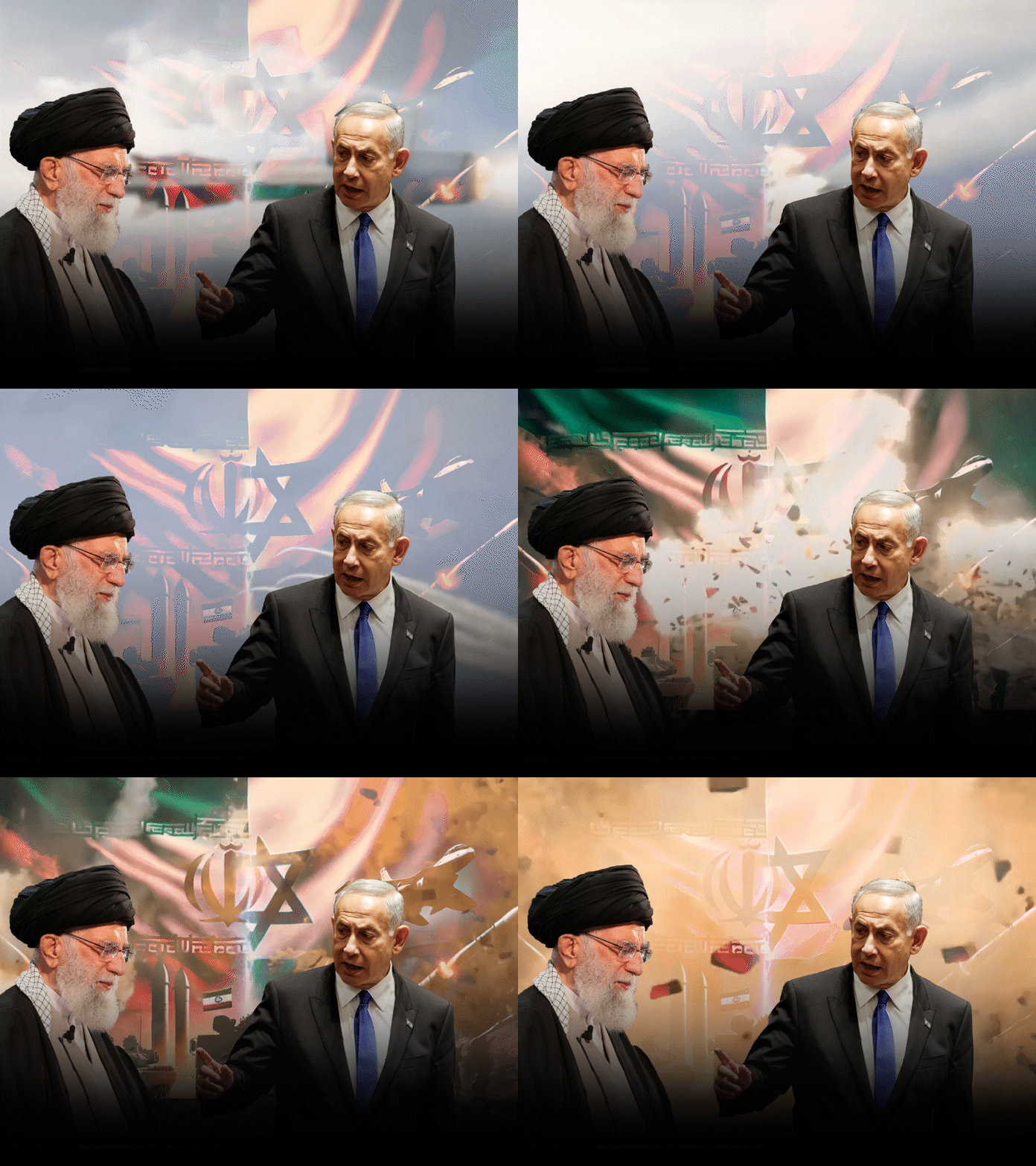
The core of the conflict between Iran and Israel is rooted in fundamental ideological differences and geopolitical competition that emerged after the 1979 Islamic Revolution in Iran.
 |
| Source:- Internet Sites & News Agencies |
Original Issue:
Prior to 1979, Iran and Israel actually had relatively warm, though often covert, relations, driven by a shared strategic interest in countering Arab nationalism (Israel's "periphery doctrine").
Key factors that define the "original issue" and continued animosity include:
- Ideological Opposition: The Islamic Republic of Iran's foundational ideology views Israel as an illegitimate entity and a symbol of Western influence in the Middle East.
- Support for Palestinian and Lebanese Militant Groups: Iran began actively supporting Palestinian groups like Hamas and Palestinian Islamic Jihad, and Lebanese Shia militias, most notably Hezbollah, which are all dedicated to resisting Israel.
This support is a major point of contention for Israel, which views these groups as terrorist organizations and an existential threat. - Iran's Nuclear Program: Israel perceives Iran's nuclear program as an existential threat, fearing that Iran seeks to develop nuclear weapons.
Israel has consistently sought to prevent Iran from acquiring nuclear capabilities through various means, including sanctions, sabotage, and targeted assassinations. Iran maintains its nuclear program is for peaceful purposes. - Regional Hegemony: Both Iran and Israel seek to assert their influence in the Middle East, leading to a proxy conflict across various regional fronts, particularly in Syria, where Iran supports the Assad regime and Israel conducts strikes against Iranian and Iranian-backed targets.
Timeline of Controversy (Key Escalations and Milestones):
The conflict has largely been a "proxy conflict" or "cold war" for decades, marked by covert operations, cyberattacks, assassinations, and support for various armed groups, but has seen periods of direct escalation, especially in recent years.
- 1979 (Islamic Revolution): Iran cuts all official ties with Israel and adopts an overt anti-Israel policy.
- 1982 (Lebanon War): Israel invades Lebanon. Iran helps establish and arm Hezbollah to resist the Israeli occupation.
- 1990s: Covert hostilities continue, with allegations of Iranian involvement in terrorist attacks against Jewish and Israeli targets abroad, and Israeli covert actions against Iran.
- 2006 (Lebanon War): Israel fights a war with Hezbollah, heavily supported by Iran.
- 2000s-Present:
- Iran's Nuclear Program: Israel pushes for international sanctions against Iran and is suspected of carrying out cyberattacks (like Stuxnet in 2010) and assassinating Iranian nuclear scientists to hinder its nuclear program.
- Syrian Civil War (2011-Present): This becomes a major front in the Iran-Israel proxy conflict.
Iran deploys forces and supports allied militias in Syria, while Israel conducts numerous airstrikes against Iranian and Hezbollah targets in Syria, aimed at preventing the transfer of advanced weaponry and the entrenchment of Iranian influence near its borders. - Attacks on Shipping: Both sides have been accused of targeting each other's commercial and military vessels in the Red Sea and Gulf region.
- October 7, 2023 (Hamas attack on Israel) and Gaza War:
The Hamas attack, which Israel attributes to significant Iranian backing, significantly escalates regional tensions. Iran-backed groups like Hezbollah in Lebanon and the Houthis in Yemen increase their attacks on Israel and Israeli-linked shipping, further drawing Iran and Israel into direct confrontation.
- Iran's Nuclear Program: Israel pushes for international sanctions against Iran and is suspected of carrying out cyberattacks (like Stuxnet in 2010) and assassinating Iranian nuclear scientists to hinder its nuclear program.
- April 1, 2024: Israel bombs an Iranian consulate complex in Damascus, Syria, killing multiple senior Iranian officials, including a top IRGC commander. This is a significant escalation as it targets an official diplomatic mission.
- April 13, 2024: Iran launches a direct retaliatory missile and drone attack on Israel, the first of its kind. Most projectiles are intercepted by Israel and its allies.
- April 19, 2024: Israel conducts a limited retaliatory strike on targets within Iran.
- October 1, 2024: Iran launches another series of missiles at Israel.
- June 12-17, 2025 (Most Recent Escalation): Israel launches airstrikes against Iranian nuclear facilities and military infrastructure, reportedly in response to intelligence about Iran "approaching the point of no return" in its nuclear program.
This is followed by significant retaliatory missile strikes from Iran on Israel, marking an ongoing and direct war between the two countries with reports of substantial casualties on both sides.
This timeline highlights the deepening animosity and increasingly direct nature of the conflict, moving from a proxy war to overt military exchanges.

Hi, How are you dear. Hope you are good